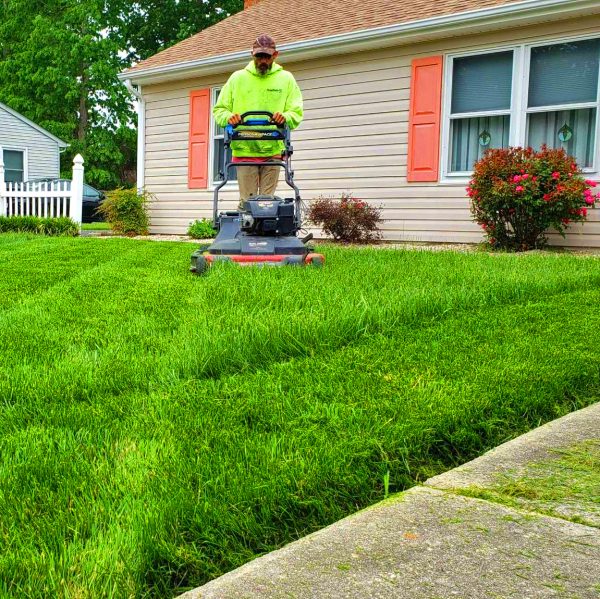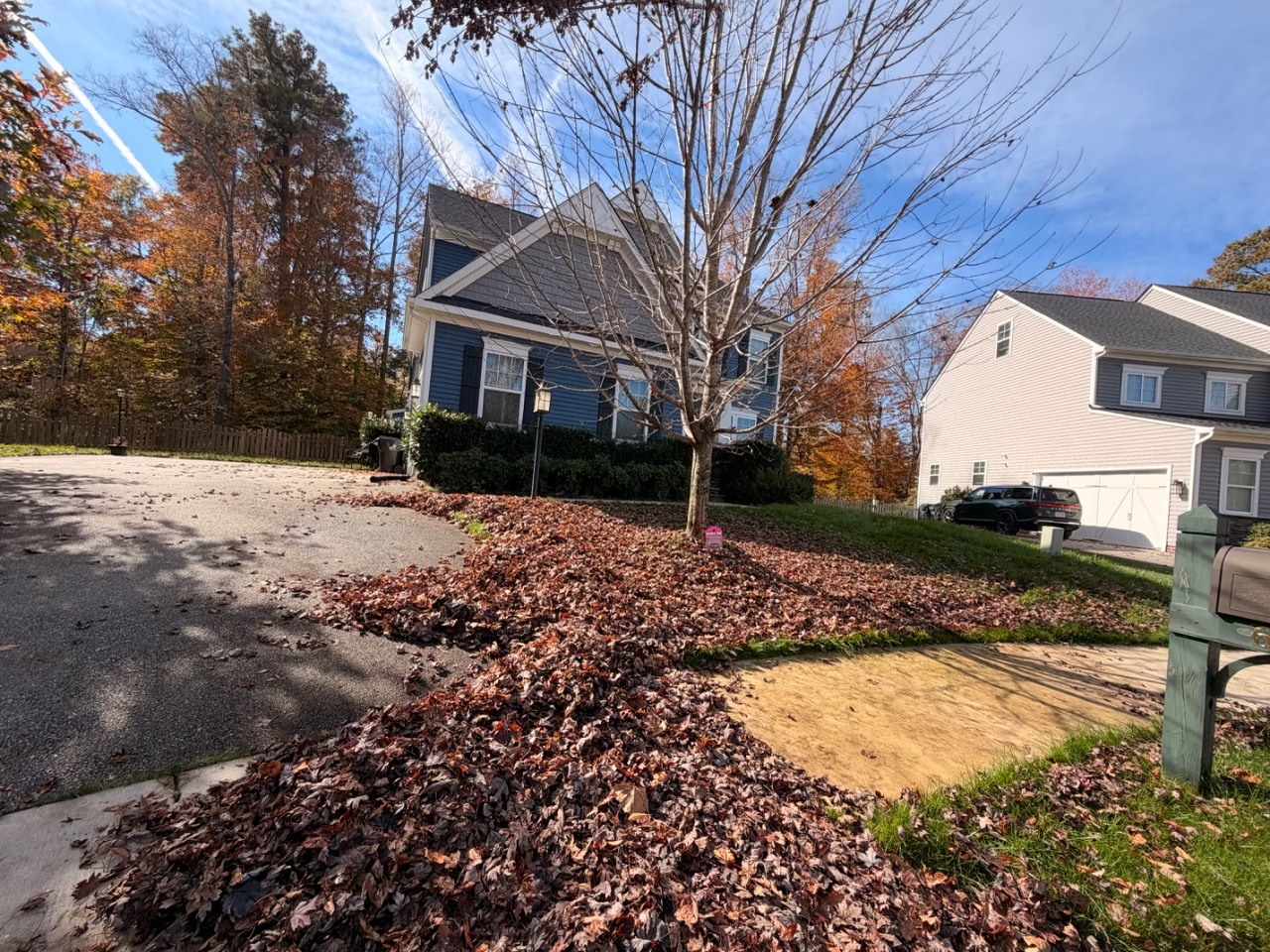
Short answer: A light layer of leaves on your lawn is fine. Mulch it with your mower and let it break down. But a thick layer left sitting on your lawn blocks sunlight, traps moisture, and can smother grass, especially new grass that was just seeded this fall.
We’re Picture Perfect Lawn Maintenance, a family-owned lawn care company serving Petersburg to Richmond since 2005. Every fall our technicians see the same thing: lawns that looked great in October and come out of winter thin and patchy because leaves were left on them too long. Here’s how to keep that from happening to yours.
Why are too many leaves bad for your lawn?
Fall is when your grass is building roots and storing energy for spring. A heavy blanket of leaves gets in the way of that:
- It blocks sunlight. Grass still needs light in the fall to make the food it stores for winter.
- It traps moisture. Wet, matted leaves create the damp, shady conditions where lawn diseases thrive.
- It smothers new grass. If your lawn was aerated and seeded this fall, those young seedlings are the most at risk. A thick layer of leaves can thin them out before they ever get established.
Is it OK to leave some leaves on your lawn?
Yes. A light scattering of leaves won’t hurt your lawn. The problem is when leaves pile up, mat down, and stay there for weeks.
Can I mulch leaves with my mower?
Yes, and it’s one of the easiest options. Running over light layers of leaves with your mower chops them into small pieces that settle down into the grass and break down into the soil. Virginia Tech’s turfgrass experts recommend mulching no more than six inches of leaves at a time, and say that while mulched leaves can add some nutrients, they don’t replace soil testing or a proper fertilizer program. (Virginia Tech)
A few tips:
- Mulch when the leaves are dry or just slightly damp, not soaking wet.
- Clear sticks and branches first.
- If you can still see a thick layer after mulching, it’s time to rake or bag.
When should you rake or remove leaves from your lawn?
Remove leaves when they’re thick enough that you can barely see the grass underneath, or when they’ve matted down after rain. Rake, blow, or bag them so the grass can breathe. And don’t forget the edges: leaves collect along fences, beds and corners, which are often the spots that come out of winter looking the thinnest. For more tips, watch our video: Fall Leaf Clean Up Do’s & Don’ts.
How do you protect new grass seed from leaves?
Newly seeded areas need the most attention. Keep leaves cleared off them regularly, and use a leaf blower instead of heavy raking, since a rake can pull up young grass before it has strong roots. For more on this, see our post: Is Mulching Leaves Bad for Grass Seedlings?
Can you fertilize your lawn with leaves on the ground?
Yes, as long as the leaves aren’t too thick. This is one of the most common questions our technicians get in the fall.
Our rule of thumb: if you can still see about 20–30% of the grass through the leaves, your lawn can be fertilized. Granular fertilizer is dense enough that when it hits the leaves, it bounces down to the soil level and works just as well.
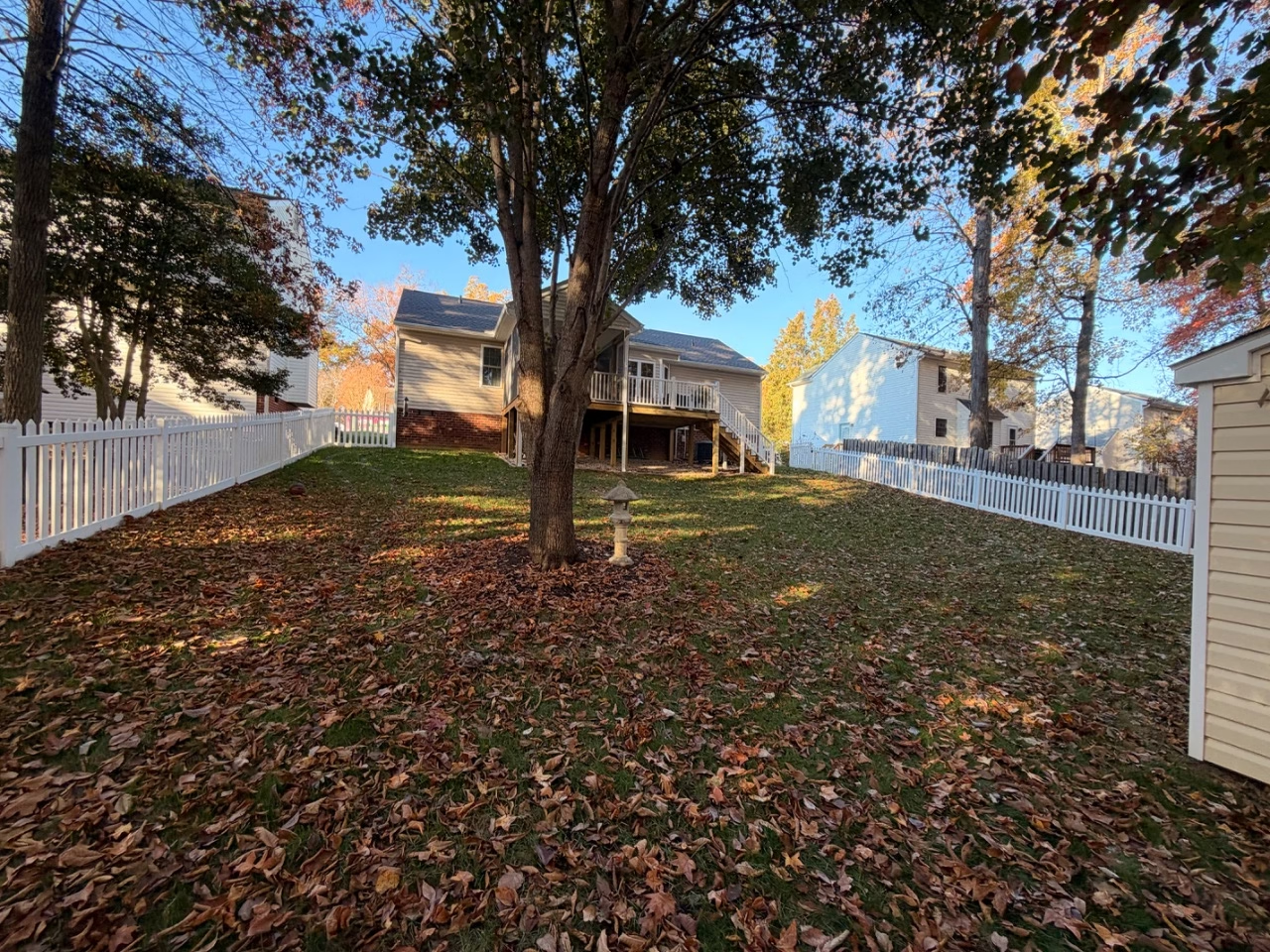
If the leaves are so thick that fertilizer can’t reach the ground, that’s a sign your lawn has a bigger problem. A layer that heavy is also smothering the new baby grass that was just planted.
Why does fall feeding matter?
Clearing the leaves on your lawn and fall fertilizing go hand in hand. Together they help your lawn go into winter strong and green up faster in the spring. Learn more in our post on winterizing fertilizer.
Quick answers
Should I leave leaves on my lawn over winter?
No. A thick layer left all winter can smother grass and lead to thin, patchy spots in spring. Mulch light layers and remove heavy ones.
Is it better to rake or mulch leaves?
For light layers, mulching with your mower is easiest and returns some nutrients to the soil. For heavy layers, rake, blow, or bag them.
Can leaves kill grass?
A thick, matted layer left too long can, especially on newly seeded lawns.
Can you fertilize over leaves?
Yes, if you can still see about 20–30% of the grass. Granular fertilizer bounces through the leaves down to the soil.
Want a lawn that comes out of winter strong?
Picture Perfect Lawn Maintenance is a family-owned lawn care company serving Petersburg to Richmond since 2005, focused on one thing: healthy, green lawns. 📞 Call 804-530-2540 or visit pictureperfectlawn.net for a free estimate.
New customers: get 10% off a full 2027 program when you accept your estimate by November 30, 2026.